
Literature as a Wake-up Call
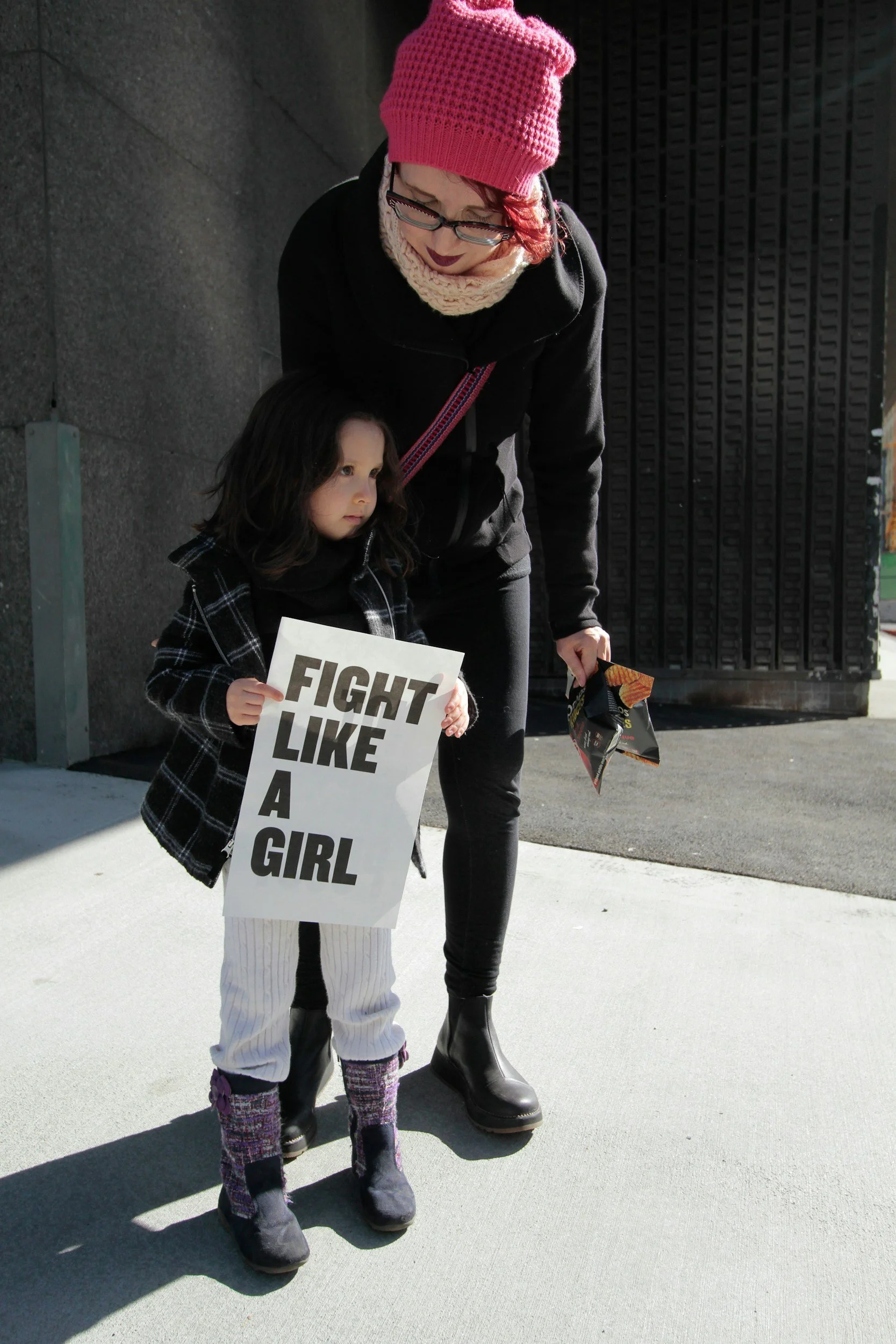
As a child, I was a huge fan of books. My mum has always been a source of inspiration for me. Her understanding of the world comes from literature, which helped her grow into an outstanding lady. I've always been interested in novels or books that tell the story of female characters and their mental processes. It was an even more wonderful experience to read stories from a historical perspective that portrayed the storyline of the main female hero rebelling against society. A protagonist who is bothered by questions and is conscious that she is looked down, just because she is a woman. My parents separated and I grew up with a strong woman like my mother, it was one of the reasons why I was never aware of the inequalities between men and women. I was raised the same way whether I was a female girl or a boy. She constantly encouraged me to share my thoughts, even if they were controversial due to my gender but the books taught me not to take what I had for granted. Literature and history taught me that what we have, had to be won by other brave heroines. The lack of a right to vote or freedom of expression was powerfully portrayed in classic stories about heroines struggling for their rights. I'm not sure how old I was, but the novel Little Women by Louisa May Alcott, which was subsequently adapted into a film multiple times, resonated with me the most in this context. The storyline of the four sisters, in which the thinking of society in the nineteenth century was illustrated accurately, that their only task is to be married and produce children, was a breakthrough because of the character Jo March ”I find it poor logic to say that because women are good, women should vote. Men do not vote because they are good; they vote because they are male, and women should vote, not because we are angels and men are animals, but because we are human beings and citizens of this country” (Alcott, 1868). That is what I feel about equality to this day: we are all human beings, regardless of gender, race, age, orientation, or area of origin. We can all call her a feminist fighting for her position in family and society. During her time, no one was thinking of women as something valuable and movements that could be representing them. It all started as an activist movement which is primarily focused on gender inequalities, but it necessarily doesn't study gender itself. Certain authors have considered feminism as a 20th-century movement which hugely impacted the social, political and cultural life of people in the world. It began with the belief that women were and continue to be treated unfairly in society because they belong to a gender that is oppressed.
Society, throughout her history, has relied on patriarchal paradigms which led to seeing women as being what men aren't. Taylor Swift in one of her interviews (Morning, 2019) described in an accurate way how vocabulary and the same behavior can change drastically point of view of seeing males and females in action: if men have been considered as strong, women have been characterized as weak, if men have been seen as rational, women have been considered as emotional, men are allowed to react while women can only overreact. We all know and have always known that men and women are physically different and have different biological identities, but this dissimilarity cannot be used to "justify" a different societal valuation of men and women. As societal norms change, so do the requirements and reasons for fighting for women's rights. Many historians and activists believe that feminism has three separate "waves," with the "#MeToo Movement" being a modern fourth wave. The first wave of the feminist movement is widely associated with the first formal Women's Rights Convention in July 1848, although the inspiration began during the French Revolution when a substantial number of women participated and advocated for their rights on the front lines (Feminism: The First Wave, 2021). The convention in 1848 was organized by Elizabeth Cady Stanton and Lucretia Mott at Seneca Falls. Attendees signed the Declaration of Sentiments, which proclaimed women's equality with men and passed a variety of resolutions supporting different rights, including the ability to vote. Although the early women's rights movement was related to temperance as well as abolitionism, the ratification of the 15th Amendment in 1870 angered some women's rights activists who despised Black men being allowed vote before white women. Similarly, Black feminists such as Sojourner Truth and Ida B. Wells were mainly marginalized or excluded by the women's suffrage movement. Despite the fact that the adoption of the 19th Amendment in 1920 achieved the primary aim of the first wave, granting white women the right to vote, Black women and other women of color faced difficulties and challenges until the implementation of the Voting Rights Act in 1965 (Pruitt, 2022). Beginning in 1963, the second wave of feminism focused on private and personal inequalities such as rape, reproductive rights, domestic abuse, or job harassment. However, they, such as the suffrage movement, faced criticism for focusing on privileged white women (Pruitt, 2022). The spark for second-wave feminism was Betty Friedan's 1963 book The Feminine Mystique, which attacked the postwar idea that a woman's job was to marry and produce children. Her feminist philosophy, however, was neither revolutionary. Prior to her, Simone de Beauvoir released The Second Sex in 1949, in which she presented elaborate definitions of femininity and pointed out how women have traditionally been viewed as second-class citizens to males (Second Wave Feminism: Collections). She was also viewed as a philosopher since she attempted to provide answers to complicated philosophical concerns. In the same work, she asks, "What is a woman?" Eventually, she came to the realization that "one is not born but becomes a woman." The 1990s and the beginning of the twentieth century showed that there is no single homogeneous feminism, but rather multiple currents attempting to highlight the diversity of women's experiences based only on gender (Buršová). Intersectionality refers to the concept of dealing with various levels of discrimination or, paradoxically, also favoring in developing society. Professor Kimberlé Crenshaw created the word in 1989 to explain how race, class, gender, and other human traits "intersect" and overlap. It helps us to recognize that, while all women are affected by the pay gap, certain women are disproportionately disadvantaged due to their race. Cases of LGBTQ killings are another example of intersectionality at work: persons of color and transgender individuals are more likely to be victims than cisgender people (A Brief History of Civil Rights in the United States: Feminism and Intersectionality, 2023). As a result, oppression cannot be reduced to a single aspect of an individual's identity, each oppression is dependent on and influences the other (Intersectionality: What is it and why it matters, 2021). When I heard this term for the first time, I immediately thought of a novel by Chimamanda Ngozi Adichie, Amerikána. Her TED talks, as well as her world-famous essay We Should All Be Feminists, have gotten a lot of attention but Amerikána is one of her most famous pieces over the world. The story of a black woman from Lagos who goes to America demonstrates different racial disadvantages or privileges. The heroine frequently wonders if what she has is just due to her personality or education, or if it is due to her different skin tone. As the land of dreams, America has long attempted to create an image of freedom and tolerance. For decades, this image has been spreading and portraying it in the best way possible. Amerikána is primarily a novel focused on a love story between two young people who were separated due to their different goals. She moved to America and began blogging on race and cultural issues. Chimamanda Ngozi Adichie was analyzing universal discrimination, prejudices, and stereotypes. Books by authors from different cultures typically give me a new perspective on the world, which I enjoy but they also leave me with more questions than answers. These writings should be required reading in schools, allowing our brains to be opened so the word tolerance would be no longer a taboo in our society.
Bibliography A Brief History of Civil Rights in the United States: Feminism and Intersectionality. (2023). library of Howard University . Alcott, L. M. (1868). Little Women. Buršová, I. (dátum neznámy). feminismus treti a ctvrte vlny a intersekcionalita. heroine . Feminism: The First Wave. (2021). National Women´s History Museum . Intersectionality: What is it and why it matters. (2021). The University of British Columbia . Morning, C. S. (2019). Preview: Taylor Swift on sexist labels in the music industry. Pruitt, S. (2022). What Are the Four Waves of Feminism? History . Second Wave Feminism: Collections. (dátum neznámy). gale .