Green attitudes in France: Impact of political culture on Macron´s pro- environmental policies
The rise of green political culture
In the contemporary world where environmental issues are becoming the topic of the day while observing the lenient political response to public demand, it is relevant to ask the question of whether people are prone to accept more strict environmental policies and force politicians to undertake concrete steps in this regard or whether their values are not directly proportionate to their political expectations. The aim of this study is to examine the political culture within France, more precisely the sensitivity of the public to the environmental issues, and followingly what is the response of the politicians to the demands of the citizens in terms of enforcing environmental policies. The research question that we will aim to answer is what the impact of political culture on Macron´s pro-environmental policies was. Macron´s environmental agenda was a direct response to the strong demand of the citizens for stricter green policies.
Methodology To determine whether there is a causality between political culture and Macron´s pro-environmental policies the case study will be used since it will best serve the objectives of this research and reflects our incapacity to analyse the phenomenon on a larger scale. Case study refers to a method in comparative politics where the primary focus is on the single case while the researcher aims to draw general conclusions valid not only for the one case but for all of the cases containing similar variables (Gerring, 2004). The greatest advantage according to Lijphart (1971) is the fact that the focus on a single case allows us to examine it to a great depth regardless of our limited resources. This study will serve the purposes of theory-building, and therefore the examination and analysis of the situation in France and its conditions will be a cornerstone for formulating a general hypothesis. However, it must be taken into consideration that the French population has its specific mentality which derives from its rich historical development, and therefore the conclusion might be dramatically different, and hence not applicable to other states. For the purposes of the study, we will use the hypothesis-generating case study that will facilitate the translation of the observed phenomenon into a general theory. Lijphart (1971) defines this method as “an attempt to formulate a definite hypothesis to be tested subsequently among a larger number of cases.” In our case, this approach might clarify whether political culture is reflected in the choice of the political agenda of specific parties or individuals.
Historical route to French democracy In contemporary world France is regarded as one of the examples of functional democracy, but for comprehending the processes that lead the country towards its current regime, we must begin with the examination of the situation in France in 17 th century. At that time France was a monarchy ruled by the king Louis XIII who appointed Cardinal Richelieu to be the Chief Minister of France (“History of France”, n.d.). Richelieu facilitated the monopolization of force in hands of the king by eliminating his domestic enemies by destroying castles of local power holders which lead to strengthening of the royal power (“History of France”, n.d.). This process could be understood through Tilly´s theory of state- building, or in other words the attempts to eliminate rivals within the territory of the state which he refers to as the monopolization of violence (Tilly, 1985). The centralization of power did cause strong protests of feudal lord against rise of absolutistic power (“History of France”, n.d.). To appease the conflict Louis XIV promoted feudal lords to the function of courtiers which granted limited privileges to the nobility, and as Moore (1966) suggested this relative balance of power (on one hand limited independence of elite and on the other hand the dominant power of king) was one of the major preconditions that paved the way to the democratic development later (“History of France”, n.d.). Another condition for democracy to prevail was for Moore (1966) the convergent interests of nobility and bourgeoisie that would prevent their conspiracy against workers and peasants which could be observed in case France on the fusion between nobility and bourgeoisie. On the other hand, he argued that if the revolution did not take place, the fusion might have led to the modernization from above that would be translated into the fascism (Moore, 1966).
Under the rule of Louis XV France was drown in debts due to the numerous wars and ineffective governance (“History of France”, n.d.). In order to mitigate the financial crisis, the king needed to promote capital accumulation by introducing tax reform that unequally burdened the peasants who were the only class paying taxes (“History of France”, n.d.). All attempt to divert the economic catastrophe failed, and therefore the financial crisis resulted in Estates-General, the gathering of all three estates- the clergy, nobility, and commoners, which was a complete fiasco since commoners were overruled by the other two estates despite of representing 96% of French population (“History of France”, n.d.). Commoners established National Assembly, and their protest led to the storming of Bastille, marked as the beginning of the Great revolution (“History of France”, n.d.). Moore (1966) considered the revolution to be the final prerequisite for democracy, and according to him in France the revolution facilitated the creation of an institution that consequently favoured democratic development and destructed the Ancient regime (absolute feudalistic monarchy with presence of estates). Therefore, the decisive factor in French history was the violent revolution that facilitated the establishment of a democratic regime later on.
Long way to post-materialism? Development of French political culture
The historical development of France contributed to current political culture most notably in the fact that French society could be defined as predominantly active in terms of participation. French political culture was to a great extent influenced by the Great Revolution that caused high levels of trust towards political institutions, and trust that demands will be translated into specific policies (Kalvin, 2017). On the other hand, revolution caused an extensive social and political division that remains present even in contemporary society (Gaffney & Kolinsky, 1991). Despite this fact, the prevailing majority of the French population show support for the regime itself as all polls ever since 1958 indicate (Gaffney & Kolinsky, 1991). It was not a coincidence that France was excluded from the analysis of Almond and Verba (1963) because it was not possible to study political culture in a country as unstable as France was at that time which resulted in several changes of the regime within a short period of time. For that reason, it is desirable, to begin with, the studies of political culture in France with the establishment of the Fifth Republic in 1958. From this year onwards we could observe the homogenization of citizens and more nationalistic attitudes due to the shift from traditional allegiances (Gaffney & Kolinsky, 1991). There was a dramatic change in the value system of society- religion was in decline, the concept of emancipation of women prevailed, and the rise of cultural liberalism were the most notable changes (Gaffney & Kolinsky, 1991). Socioeconomic development accounts for the alteration in value systems since a sense of economic security facilitates reorientation towards more abstract concerns such as environmental risks (Inglehart & Welzel, 2005). The shift from materialism to post-materialism is possible under the condition that the fundamental needs of a person were fulfilled, and the person does not have to bother with mere survival (Inglehart & Welzel, 2005). It was assumed that post-materialist orientations will be prevailing in France, however, as World Value Survey (WVS) suggests the difference between materialist and postmaterialist orientations are negligible (Haerpfer et al. , 2021).
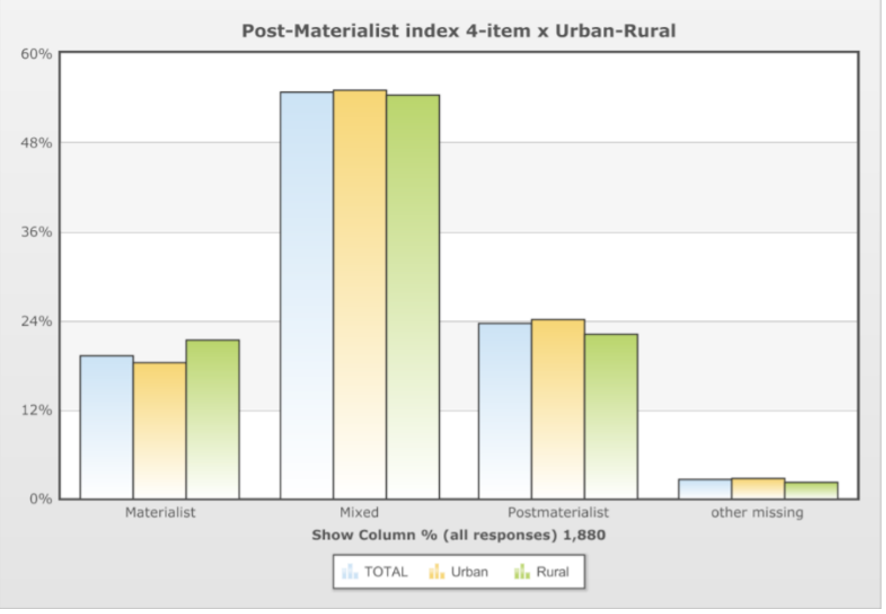
Figure 1: Post-materialist attitudes in France.
Moreover, if we examine materialist orientation based on age, we come to the conclusion that the younger generation is more prone to adopt post-materialist values, however, coming back to our hypothesis Macron´s electoral base in the 2017 presidential election was predominantly formed by the elderly (over 60) people who are according to the WVS holding materialistic values to the greatest extent amongst all generations (Statista, 2019; Haerpfer et al. , 2021).
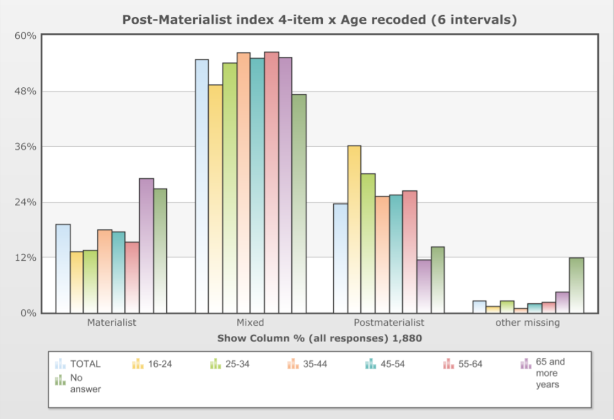
Figure 2: Post-materialist attitudes in France based on age.
Furthermore, the voter of Emmanuel Macron comes from urban areas, but urban citizens do not particularly show post-materialistic orientations any stronger than the people from urban areas do. Therefore, we could conclude that his environmental agenda did not stem from the demands of his voters.
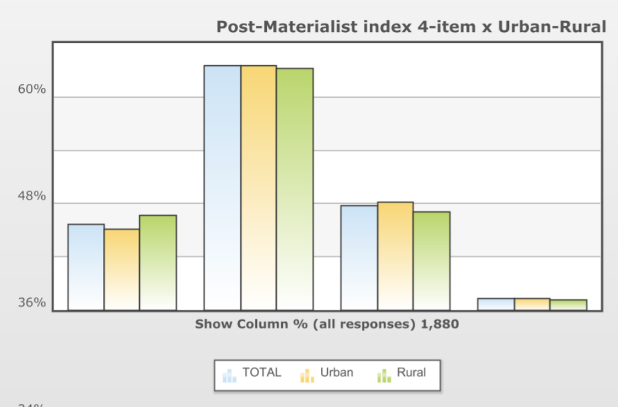
Figure 3: Post-materialist attitudes in France based on rural vs. urban origin.
The political culture was defined by Verba and Almond (1963) as a fusion of features of modernity and traditions where the emphasis is on the political orientations towards objects within the political system. The attitude towards political objects is what determines the political culture in the country. Firstly, they introduce the system as a general object – this refers to a general sentiment of citizens towards the political system which is reflected in people trusting or mistrusting the institutions. Secondly, input objects could be elucidated as a translation of demands to outputs. It is measured through the concept of trust- political representatives will adopt policies that reflect the civic demand. Thirdly, there are output objects- application and enforcement of policies by institutions, measured through the citizen´s belief that authorities are capable of enforcing the law. And lastly, self as an active participant refers to sentiments that a person has an impact on political outcomes, measured by civic engagement. Political orientations are then translated into one of three political cultures: parochial, subject, or participant, and the civic culture is then formed by a melange of those three. Prevailing participant culture is according to Verba and Almond (1963) the one that favors democracy the most because people are civically active, have high trust towards the institution, and expect a lot from the system. Moreover, in participant culture, we could observe the convergence between political system and culture – allegiance. In order to comprehend whether the political system is perceived as legitimate, the orientations towards the party system must be examined. In France, the trust in the party system seems to be stable (mistrust at 14%) over the last decade which could be interpreted as general support of the system (Kalvin, 2017). Moreover, the trust towards political processes was enhanced in past years (Kalvin, 2017). Citizens are prone to participate due to the sentiments that they can influence the policies which were measured through involvement in petitions (Kalvin, 2017). On the contrary, the evaluation of government competence is rather negative- rapidly decreasing in past few years (Kalvin, 2017). If we translate these attitudes into Verba and Almond´s model (1963), we come to the conclusion that despite the fact that people do not tend to support specific political actors (government), the political culture seems to be predominantly participant, and individuals show allegiance towards the system. From the data, it is clear that there is a congruence between political culture and structure, although there is a part of the population (nationalists) who feel alienated from the system (Kalvin, 2017).
However, in France the political participation of citizens seems to exceed “healthy” boundaries – the population responds with extreme sensitivity to any policies that are deemed to have negative consequences. People are willing to march to the streets, block them, and therefore cause the collapse of the whole infrastructure. More than 70% of the French population either participated or is willing to participate in the demonstration which emphasizes the participant nature of French politics. In addition, more than 60% of French citizens are willing to or participated in boycotts which demonstrates the civic willingness to actively engage in political life.
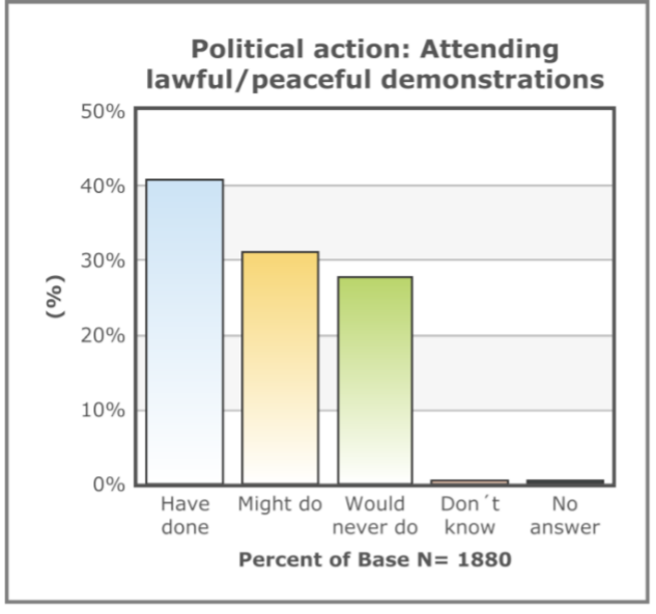
Figure 4: Participation in lawful/ peaceful protests in France.
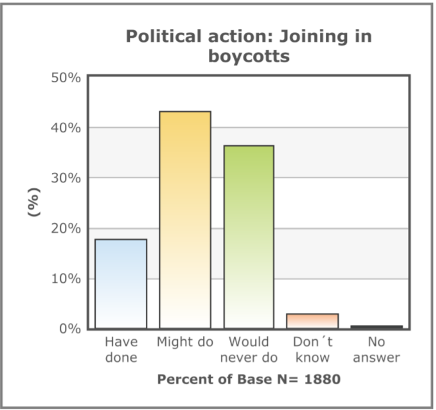
Figure 5: Participation in protests in France.
According to Almond and Verba (1963) stability is maintained if politicians respond only to the crucial demands which are in French culture difficult to determine since even for the minor issues the response of the public tends to be extensive. The government is therefore forced to respond promptly to the demands of citizens and due to this fact, there is an imbalance between political power and governmental responsiveness. (Almond & Verba, 1963). This results in ineffective governance since politicians cannot adopt policies independently but must always take into consideration the demands of the public that might often be contradictory to the principles of effective functioning of the state. This was the case with Macron´s attempts at environmental reform, more specifically policies alternating fuel taxes which were perceived as a catalyst for deepening already existing economic inequalities, and for that reason the reform was met with enormous resistance from the population leading to the nation-wide protests of the Yellowjackets. In reaction to violent riots, Macron was forced to retract the reform.
The problem with a French political culture regarding environmentalism is that citizens do not possess environmental attitudes that would stimulate their eco-friendly action. The decisive factor in the environmental behaviour of French citizens seems to be perceived cultural norms (Kashden. 2013). As Inglehart and Welzel (2005) claim cultural norms to a great extent regulate the behaviour of individuals due to the fact that they are internalized at an early age through non-rational (emotional) sanctions meaning that the person will be punished through feeling guilt and shame. The incentive for environmental behaviour in France is derived from cultural norms since in French society pro-environmental actions are greatly valued (Kashden, 2013). In contemporary society, people with environmentalist attitudes are attributed higher social status which is referred to as the “Prius effect”- an environmental form of competitive altruism whereby people pretend to act selflessly in order to obtain societal respect (Kashden, 2013). If people are to act in an ecological manner, they must perceive that those decisions can make a difference while being aware of concrete actions they could undertake (Kashden, 2013). This might elucidate the strong wave of resistance to Macron´s pro-environmental policies since people did not have environmental attitudes but they behaved ecologically due to the norms, and therefore when the policies did not correspond with their internal beliefs, they had no incentive to support them.
Conclusion
The majority of Macron´s voters claimed that in case environmental policies clashes with the objectives of economic growth, the state should rather pursue policies that would ensure economic security. Citizens demand environmental policies only up until the point when it collides with their personal interests. As proven by all of the aforementioned facts our hypothesis could be considered invalid since the research contradict our hypothesis due to the fact that Macron could not have responded to the demands of his voters, but rather acted out of his internal beliefs which in conclusion resulted in nationwide protests and shift in his policies - leaning more to the centre-right with milder environmental agenda. However, this study could generate a new hypothesis that could be a subject of further studies in the future. The proposed hypothesis could be formulated in the following manner: environmental attitudes are absent within the French population and as a result, society opposes stricter environmental policies.
Bibliography
Almond, G. & Verba, S. (1963). The civic culture: Political attitudes and democracy un five nations. Princeton, NJ: Princeton University Press.
Gaffney, J. & Kolinsky, E. (1991). Political culture in France and Germany. Routledge.
Gerring, J. (2004). What is a Case Study and What is it Good for?. American Political Science Review 98(2), pp. 341-354.
Haerpfer, C., Inglehart, R., Moreno, A., Welzel, C., Kizilova, K., Diez-Medrano J., M. Lagos, P. Norris, E. Ponarin & B. Puranen et al. (eds.). (2020). World Values Survey: Round Seven – Country Pooled Datafile. Madrid, Spain & Vienna, Austria: JD Systems Institute & WVSA Secretariat. doi.org/10.14281/18241.1
History of France. (n.d.). In Encyclopædia Britannica. Retrieved December 17, 2021, from https://www.britannica.com/place/France/History
Inglehart, R. & Welzel, C. (2005). Modernization, Cultural Change, and Democracy: The human Development Sequence. Cambridge University Press.
Kalvin, S. (2017). Understanding the evolution of political cultures in France, England and U.S.A. The review of International affairs, 4(1), pp. 17-44.
Kashden, G, A. (2013). Environmental Attitudes and Behaviors: Cross-Cultural Analysis in France and the United States. Undergraduate Honors Theses.
Lijphart, A. (1971). Comparative Politics and the Comparative Method. The American Political Science Review 65(3), pp. 682-693. Moore, B. (1966). Social origins of dictatorship and democracy: Lord and peasant in the making of the modern world. Boston MA, Beacon Press.
Statista Research Department. (2019, August 12). French election results by age 2017. Statista. Retrieved November 28, 2021 from https://www.statista.com/statistics/1037206/french-election-results-by-age/
Tilly, C. (1985). War Making and State Making as Organized Crime. In P. Evans, D. Rueschemeyer, & T. Skocpol (Eds.), Bringing the State Back In. Cambridge: Cambridge University Press, pp. 169-191.